

Diaspora Diaries: Anastasija Perincic Lopes, The Place You Remember Isn’t Always Home
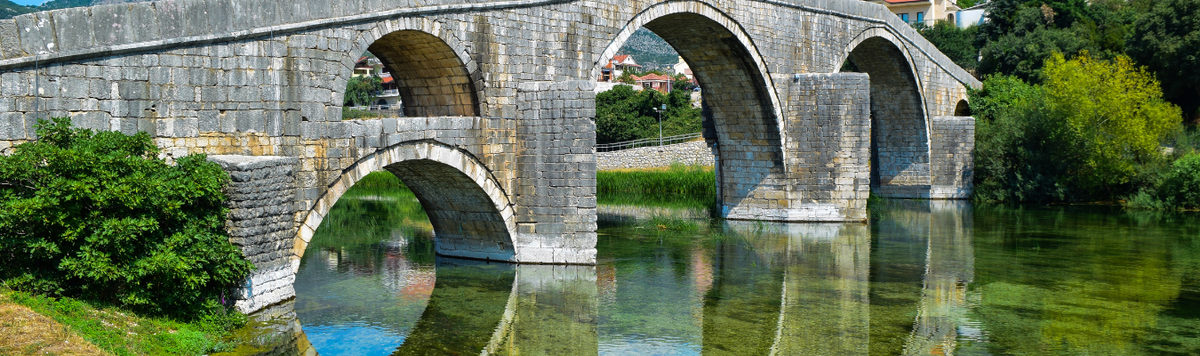
Anastasija Perincic Lopes was three and a half years old when her family left Trebinje for Canada in 1996. She remembers almost nothing of life before they left, yet she has always had a deep sense of belonging tied to the home she left.
Anastasija Perincic Lopes doesn’t remember leaving Trebinje.
There are no vivid childhood scenes of Bosnia and Herzegovina before Canada, no remembered final morning or journey she can reach back and retrieve. She was three and a half when her family immigrated in 1996, and although she has returned many times since, her earliest memories belong almost entirely to Canada.
Ask her where home is, though, and the answer becomes more complicated. When she returns to the Balkans, she says it feels like going “home" and that "I sometimes feel like a guest in Canada.”
It may be an unexpected answer from someone who has spent almost her entire life here. But memory and belonging are not always the same thing, and many diaspora stories don’t fit neatly into a single box.
A Family That Couldn’t Fit on One Map
When people ask Anastasija where she is from, she often gives the answer that leaves the most room for the truth: Former Yugoslavia. Her family tree travels across borders that have shifted more than once.
Her father’s paternal roots reach to the Dalmatian island of Rab in Croatia, with an Albanian ancestor further back in the family line. His maternal side was Serbian, from Topusko in Croatia, with roots reaching into Montenegro. Her mother’s family is Serbian and has been in Herzegovina for generations. Anastasija describes herself as “Serb, Canadian with a sprinkle of Croatian,” but adds one important qualification: “Balkan first, always.”
It isn’t difficult to understand why.
Her family arrived in Canada with very little family nearby. It was Anastasija, her parents and her older sister, with extended relatives living farther away. So her parents did what immigrant families often do when relatives are separated by geography: they found people who eventually stopped feeling like friends and started feeling like family.
Her parents built friendships with other people from the former Yugoslavia, and Anastasija remembers looking forward to weekends spent with those families and their children. Canada may have been where they were rebuilding their lives, but inside that newly built community, there were familiar customs and people who understood where they had come from without needing the story explained first.

The Weird Balkan Kid
School was different. Anastasija was bullied. Other children thought her name was strange. Her food smelled unfamiliar to them. They noticed her clothes, her family and the language they spoke. Even the way her mother dressed her stood out. Her mom had European taste, which meant that before Anastasija could explain why her family was different, sometimes she simply looked different.
Her older sister experienced it too. As a child, Anastasija resented being moved somewhere that made her feel like “the weird Balkan kid.” At home, there were fresh, home-cooked meals over the processed foods she saw in her Canadian friends’ homes. Serbian was present in everyday life. There was slava, Vidovdan, folklore and a social circle built largely around families from Ex-Yu.These were ordinary things in her house.
Eventually, Anastasija began trying to make one part of that identity less visible.
“I was embarrassed to say I was Serbian,” she remembers. Serbia, in her experience, came with negative associations she was too young to control. It didn’t receive the easy recognition she saw attached to other European identities.
It wasn’t received with the same excitement that other kids got when sharing their cultural background,”It wasn’t cool like saying, I’m Italian.’ People love Italians and Italian food.” Serbian was harder to explain. So, for a while, she tried to hide it. Now? “I’m proud of it.”
Please Don’t Tell Me Who I Am
There was another side to growing up between places that left Anastasija feeling othered just as much.
People would call her Canadian. On paper, that conclusion made perfect sense. She had arrived before her fourth birthday. She couldn’t remember her life before the war. Canada was where she went to school and where nearly all of her conscious childhood unfolded.
But being told she was “basically Canadian” by her Balkan family never felt like a compliment. It felt like someone else was editing her story. “It would bother me when people would call me Canadian and reduce my identity into what they thought it should be,” she says. “It’s like they were telling me how I ‘should’ feel.” That distinction matters. Anastasija wasn’t rejecting the country where she grew up. She was rejecting the idea that geography and memory gave someone else permission to decide which parts of her identity were legitimate.
She may not remember Trebinje at three years old, but she remembers the visits throughout the years and how she feels at home in a country so far away from her home. “In my heart, I was always Ex-Yugoslavian.” Belonging, after all, isn’t something another person gets to calculate for you based on the number of years you have lived somewhere.
What Our Parents Leave Behind
Anastasija understood her parents’ decision to immigrate differently as a child than she does now. Her family was mixed; Serbian and Croatian and the war had made them feel as though there was no longer anywhere they were entirely comfortable. Canada offered safety, but beginning again came with its own cost. Her parents took jobs that did not reflect what they had studied or the lives they had known before immigrating. Their beginnings in Canada were humble.
As a child being bullied for being different, Anastasija couldn’t fully appreciate the trade they had made. She knew what immigration had cost her: familiarity, extended family and the comfort of not being the strange kid at school.
Adulthood gave her another view. “I understand their struggle now as immigrants, and I have more empathy.” That may be one of immigration’s quietest truths. Children grow up inside the life their parents fought to create without yet understanding what had to be dismantled for that life to exist. Appreciation grows through the years.

The Grandfather Who Connected Her to Another Side
For someone whose family history crosses so many places, identity has also changed with loss. Anastasija was close with her Croatian grandfather, and through him she felt a strong connection to that part of herself. After losing him, she felt that connection weaken and found herself identifying more strongly as Serbian. It is a reminder that heritage isn’t always inherited evenly. Sometimes one branch of a family tree feels close because a particular person keeps it close. A grandfather tells the stories, speaks the dialect, and embodies a place strongly enough that knowing him becomes a way of knowing it. When that person is gone, the connection can change too.
Building a Family Across Cultures
Anastasija eventually married outside of her culture. Her husband is Portuguese, which makes the question of “dating within the culture” considerably less important to her than whether a partner respects and participates in the culture you bring with you.
For Anastasija, that matters very much. And she is grateful that her husband does. Perhaps that has become even more significant now that Anastasija is a parent herself.
Her daughter is growing up with more than one cultural inheritance, just as Anastasija did. And rather than seeing that mixture as a reason to dilute the Balkan side of her identity, motherhood has made preserving it feel even more important.
“Even though my daughter is only half Balkan, it’s still important to me that she understands her culture fully.”
Anastasija grew up frustrated when other people tried to decide how Balkan she was allowed to feel because she had spent most of her life in Canada. Now she has the opportunity to give her daughter something different: the freedom to understand every part of where she comes from without being asked to rank them.
At the end of our conversation, we asked Anastasija to finish one sentence: Being part of the Balkan diaspora means…
“I have to represent my people well.”
For Anastasija, heritage isn’t something to prove. It’s something to carry—with pride, with intention, and now, into the next generation.
Diaspora Diaries
Diaspora Diaries is a Balkanish series sharing the stories of the global diaspora community—the people growing up between cultures, languages and definitions of home. We tell these stories because family histories deserve somewhere to land, and because sometimes the most powerful reminder that we belong is discovering that someone else has felt exactly the same way.


